
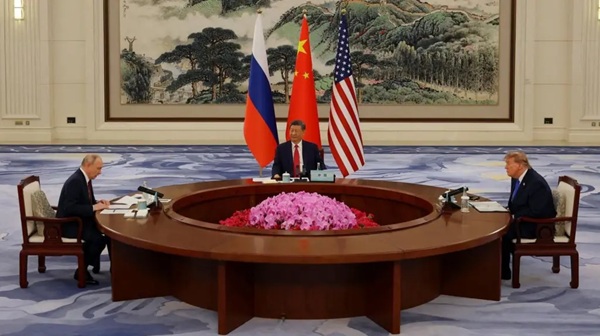
President Xi Jinping called the tripartite meeting in Shenzhen ‘groundbreaking’ but the image of an American president flying halfway around the world to sit at a table in Shenzhen with Vladimir Putin and Xi Jinping—only to be caught on camera appearing to nod off during speeches—looks less like a triumph of diplomacy and more like a stark surrender of Western values.
The benefit for Beijing and Moscow is obvious. For Putin, indicted for war crimes and mired in a brutal invasion of Ukraine, standing shoulder-to-shoulder with the leaders of the world’s two largest economies is an immediate propaganda victory. It shatters any lingering illusion of Western isolation and restores his status as a “great power” equal.
For Xi, playing host to both men in southern China is a masterclass in soft power—a visual declaration that Beijing, not Washington, is now the central stage where the future of global security is decided. Neither leader faces an electorate; both rule as entrenched autocrats whose primary goal is to dismantle the post-war democratic order.
So, what then, is Donald Trump actually getting for his air miles beyond the photo op?
Washington’s official line is that Trump wants to discuss the war with Iran as well as possible three-way agreement on nuclear armament with Xi and Putin.
Donald Trump did the 20-25 hour flight from China after a 90-minute talks with Putin and Xi Jinping. From the perspective of traditional Western alliances, the answer appears to be very little—and at a steep cost. By embracing a backroom diplomacy where three strongmen discuss the fates of smaller nations without them in the room, Trump reinforces European and Ukrainian fears that democratic sovereignty is negotiable. Calling Putin a “friend” while sidelining long-standing allies sends a chilling message to capitals from Kyiv to Taipei.
Yet, viewed through Trump’s own transactional lens, the trip is less about defending democracy and more about personal legacy and raw leverage. Bruised by domestic midterm losses, Trump thrives on the spectacle of being the indispensable man—the only leader capable of summoning rivals into a room to talk about nuclear arms, Iran, and trade.
In international diplomacy, optics are substance. When a weary American president closes his eyes while Xi Jinping outlines a new multipolar world order, the cameras capture a potent metaphor. Xi and Putin leave Shenzhen with their legitimacy boosted and their worldviews validated.
Trump, on the other hand, leaves with a historic photo-op, a handful of vague promises, and a growing question among America’s oldest friends about whether the leader of the free world is not asleep at the wheel.
‘Ladi Taiwo