
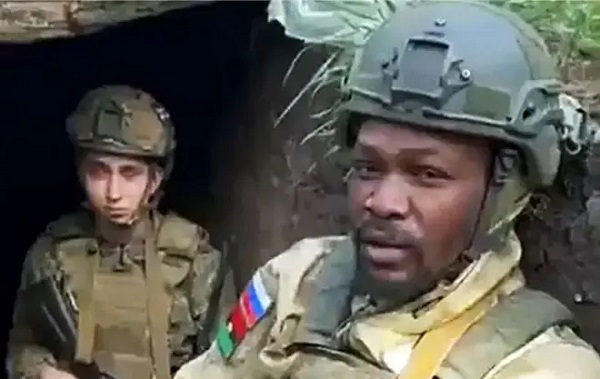
A Nigerian auto mechanic has narrated how he was tricked into fighting for Russia in its war against Ukraine after being promised a well-paid construction job, only realising he had been recruited as a soldier when he reached the battlefield.
There have been numerous reports of foreign nationals particularly Africans fighting on the frontlines for Russia having been recruited through online gaming platforms, or honeytraps via messaging App Telegram.
Bankoli Machi, a 36-year-old mechanic from Nigeria, explained how economic hardship at home pushed him to accept what he believed was an overseas work opportunity in Russia.
He said he was approached through an intermediary and offered a construction contract with the promise of high pay, which he understood to be around 500,000 naira. The paperwork he was sent was written entirely in Russian, and he said he relied on others to tell him where to sign.
“I came to Russia to work,” he said. “I did not know that I was coming to join soldier.” Machi travelled from Nigeria to Moscow via Ethiopia, telling his family he was leaving to earn money to support them and eventually start a business back home. He said his relatives were pleased, believing he had secured a rare opportunity.
On arrival in Moscow, Machi said he was taken to what he later realised were military camps. There, he encountered other foreign nationals, including recruits from Brazil, China, Ghana, Uganda and Nigeria. Communication was limited, with many relying on phone translation apps to understand orders.
He said recruits were given uniforms and trained to use rifles, grenades and landmine detection techniques. Training included night movement using phone navigation and lessons on handling AK-style weapons.
“At the camp, once you enter, there is no going back,” he said.
After being moved through several camps, Machi said his group was eventually taken at night into wooded areas near the front line. He only realised he had crossed into Ukrainian territory when he recognised the colours of the Ukrainian flag on clothing and buildings.
Speaking to the Ukrainian Third Army Corps, Machi said he was issued a Russian flag and instructed to raise it at a designated point to signal his unit’s position, though he said the mission was never properly explained in a language he understood.
“I told my friend, this is Ukraine,” he said. “Before I knew it, I was shot.”
Machi was hit in the leg and lost consciousness. He said he saw wounded men lying on the ground during the advance and believed he was about to die. He was later captured by Ukrainian forces after surrendering.
He said Ukrainian soldiers removed the bullet from his leg and provided food and water.
“I was not expecting the way they treated me,” he said. “They helped me. They gave me food. I’m alive.”
Asked whether he believed he had been deliberately used, Machi said yes.
“This is what I will call use,” he said. “I came to work, not to fight.”
He said he would never return to Russia and urged others considering overseas work offers to verify contracts carefully.
“Know what you are coming for,” he said. “If it is work, make sure it is work. If it is war, know it is war. Don’t just sign what you don’t understand.”
The account adds to growing evidence that foreign nationals are being recruited under false pretences and funnelled into frontline combat roles in Russia’s war against Ukraine.