Trump’s investment portfolios have bought or sold shares in chipmaker Nvidia at least 44 times this year, a review of the US president’s financial disclosures shows.
Read More »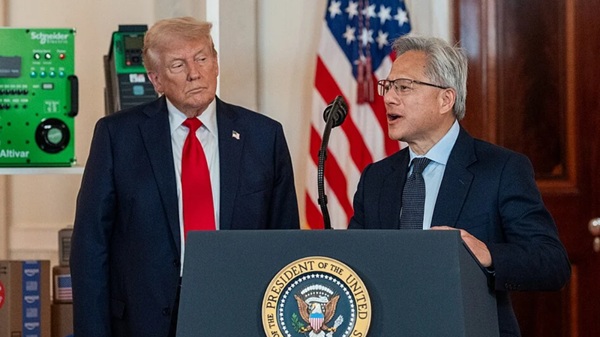

Trump’s investment portfolios have bought or sold shares in chipmaker Nvidia at least 44 times this year, a review of the US president’s financial disclosures shows.
Read More »
Media outlets in Central African Republic observed a day without news on Wednesday to spotlight the mounting pressure on independent journalism.
Read More »
Elon Musk’s SpaceX has secured conditional approval from the US Federal Communications Commission (FCC), to deploy up to one million AI data centre satellites.
The decision comes despite warnings about orbital overcrowding and the growing risk of satellite collisions.
The project, known as Starmind, aims to meet rising demand for artificial intelligence computing power, in the face of growing anti data centres in almost all the sites proposed by residents.
Its proposed scale has raised concerns about the Kessler syndrome, a potentially destructive chain reaction involving space debris that could threaten communications satellites, weather monitoring systems and future space missions.
SpaceX plans to harness solar energy to power its orbital data centres operating between 500 and 1,002 kilometres above Earth.
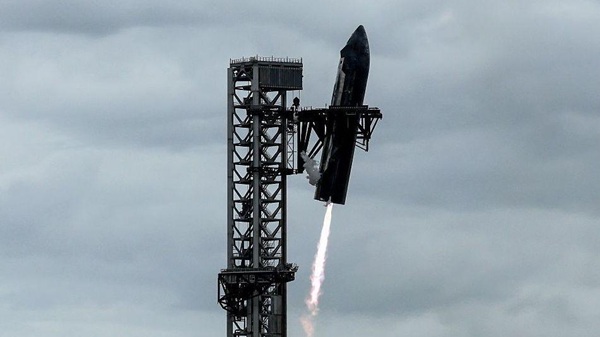
Approximately 17,000 satellites are currently in space. If fully deployed, Starmind alone would contain nearly 60 times that number.
The American Astronomical Society (AAS), Kuiper Systems and satellite communications company Viasat opposed the application. Concerns included orbital congestion, space debris, environmental consequences and interference with astronomical research.
In 1978, NASA researchers Donald Kessler and Burton Cour-Palais described how satellite collisions could generate a growing belt of orbital debris. This phenomenon became known as the Kessler syndrome.
Satellites provide internet access to remote communities, supply weather forecasting data and help authorities monitor natural disasters. Collisions involving spacecraft in affected orbital regions could disrupt these services.
Under the FCC licence, deployment of the satellites must begin no later than November 2033. SpaceX will be required to have deployed 10% by November 2035, rising to 50% by November 2038.
The company has already said it wants to launch its first Starmind satellite next year.

The Department of Justice has issued a grovelling apology for wrongly suggesting to a judge that the top lawyer for the House of Representatives had approved a raid on the D.C. home of congresswoman Ilhan Omar.
Read More »
A Zimbabwean court has issued an arrest warrant for Bellarmine Chatunga Mugabe, the youngest son of the country’s late former president Robert Mugabe, after he failed to appear in court.
Read More »
President Xi Jinping called the tripartite meeting in Shenzhen ‘groundbreaking’ but the image of an American president flying halfway around the world to sit at a table in Shenzhen with Vladimir Putin and Xi Jinping—only to be caught on camera appearing to nod off during speeches—looks less like a triumph of diplomacy and more like a stark surrender of Western values.
Read More »
A Swedish town chief has been fired after X-rated content from his time as a porn star resurfaced online.
Read More »
Ghana’s government has been forced to defend its purchase of a new presidential jet amid criticism over its cost, as many citizens continue to struggle with the high cost of living.
Read More »
A war reporter who survived guns, bombs and grenades is suing for £1.6million after breaking his ankle outside a restaurant in the famous Borough Market.
Read More »
A man has died after attempting to eat a bomb that looked like a sweet treat. Rajendra Barautiya, 35, bit into the explosive, triggering a blast that left him with fatal injuries, police in India said on Friday.
Read More »